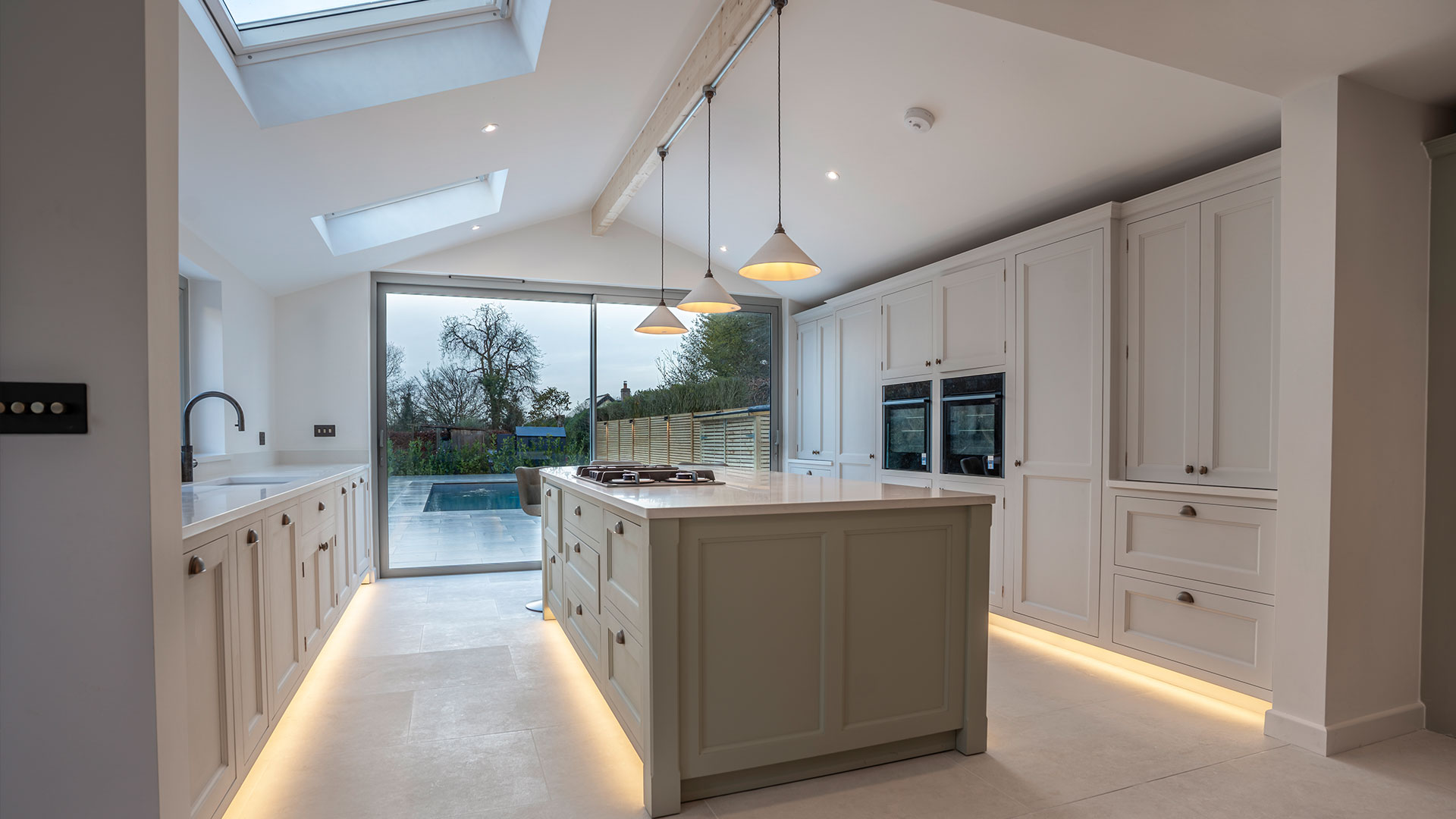
Open any architectural magazine or browse social media for inspiration and you will find countless images of stunning homes. Expansive glazing, dramatic staircases, luxurious kitchens and beautifully landscaped gardens dominate the conversation. While these features undoubtedly create visual impact, they rarely answer the question that matters most - how does the home actually work for the people living in it?
A truly successful bespoke home is not defined by how impressive it looks on completion day. It is defined by how effortlessly it supports everyday life for years to come.
The best homes are not designed around trends, award-winning elevations or fashionable interiors. They are designed around routines, relationships and the way a family genuinely lives. That's the difference between designing a house and creating a home.
Many people approach a bespoke home project with folders full of inspirational images. There is nothing wrong with that. They help communicate style, materials and architectural preferences. However, before an architect begins sketching floor plans, there should be a different conversation altogether.
For example, how does your family spend a typical weekday? Who is usually first awake? Does everyone gather in the kitchen before leaving for work and school? Do children come through the front door or the utility room? Where do muddy boots, coats, school bags and dog leads end up? Do you regularly work from home and how often do friends and family stay overnight?
These questions may seem unrelated to architecture, but they are often the foundation of exceptional home design. The answers determine how the house should function long before anyone decides what it should look like.
The Kitchen Is No Longer Just a Kitchen
For generations, kitchens were primarily places where meals were prepared. Today, they are often the busiest and most important spaces within the home. Children complete homework while dinner is cooking. Parents answer emails between meetings. Friends gather around kitchen islands rather than formal dining tables. Weekend breakfasts become family events.
Designing a kitchen simply around appliances and cabinetry overlooks how people actually use the space. The questions should therefore be different.
How many people cook together? Where do guests naturally gather? Is there enough space for children without interrupting whoever is preparing food and can someone work quietly while family life continues around them?
These considerations influence everything from circulation space and seating arrangements to storage, lighting and connections with the garden. The most successful kitchens don't just look beautiful. They support the way the family lives every single day.
All this happens because the way we use our homes has changed dramatically over the last decade. Remote and hybrid working have become part of everyday life for many professionals, yet dedicated home offices are often treated as secondary spaces.
In reality, they deserve the same level of thought as kitchens and living rooms. A workspace positioned beside a noisy family area may quickly become frustrating. Likewise, an office tucked into a dark spare bedroom may discourage productivity and wellbeing.
Good home design considers natural light, privacy, acoustics and flexibility, creating spaces that work equally well for focused work, online meetings and day-to-day family life.
Increasingly, homeowners are also recognising that workspaces should be adaptable. A home office today may become a guest bedroom, hobby room or reading space in years to come. Flexibility has become one of the defining characteristics of well-designed homes.
Planning for Twenty Years, Not Two
When people build a bespoke home, they often focus on their immediate needs. The most successful projects look much further ahead because children grow up, careers change, families expand, parents move in and retirement arrives.
A home that works perfectly today may become less practical if future needs have not been considered and future-proofing doesn't necessarily mean making every room larger. It means making spaces more adaptable.
Could a ground-floor study become a bedroom if mobility changes? Is there sufficient storage as family life evolves? Can technology be upgraded without major disruption? Will the layout still feel practical once children leave home?
Thinking about these questions early allows homeowners to create properties that continue working for decades rather than requiring significant alterations every few years.
One of the biggest misconceptions in luxury home design is that more rooms automatically create a better home - they don't. Many families would gain greater value from two flexible spaces than from several rarely used bedrooms.
A cinema room today could become a home office tomorrow. A playroom may evolve into a teenage lounge before eventually becoming a guest suite. A gym could become an accessible ground-floor bedroom later in life. Designing rooms around activities rather than fixed labels creates homes that evolve naturally alongside the people living in them.
Furthermore, beautiful interiors rarely stay beautiful without thoughtful storage. Every family accumulates possessions. Shoes, sports equipment, seasonal clothing, cleaning products, luggage, children's toys and everyday essentials all need somewhere to live. When storage is overlooked, even the most elegant home can quickly feel cluttered.
Good design considers storage from the very beginning rather than treating it as an afterthought. Boot rooms, utility spaces, integrated joinery and concealed storage all contribute towards creating calm, organised living environments. The objective is not just to create more cupboards. It's to ensure everything has a logical place.
Light Shapes How a Home Feels
Natural light is also one of the defining characteristics of exceptional homes and successful design is about much more than adding larger windows. It involves understanding how the sun moves across the site throughout the day.
Morning sunlight may be perfect for kitchen and breakfast areas. Evening light may be better suited to living spaces and outdoor terraces. Views, privacy and solar gain all need to be carefully balanced.
When natural light has been thoughtfully considered, rooms feel more comfortable, more inviting and more closely connected to the surrounding landscape and good architecture works with nature rather than against it.
The relationship between house and garden is also one of the biggest opportunities within bespoke home design. Rather than treating outdoor areas as separate spaces, the most successful homes create seamless connections between inside and outside.
Large sliding doors, covered terraces, outdoor kitchens and carefully designed landscaping all help extend the usable living space. Whether entertaining friends, enjoying family meals or simply relaxing on a summer evening, outdoor areas should feel like a natural continuation of the home itself. The transition between interior and exterior should be effortless.
Increasingly, homeowners also want properties that combine outstanding design with exceptional performance. Energy efficiency, high levels of insulation, renewable technologies, intelligent heating systems and sustainable materials are becoming integral parts of premium home design.
These features reduce running costs, improve comfort and help future-proof the property against changing regulations and energy demands. Importantly, they also enhance everyday living.
In short, the most successful bespoke homes share one common characteristic. They make everyday life easier. They reduce frustration rather than creating it. They support family routines instead of dictating them and they feel intuitive because every room has been designed around the people who live there.
Long after guests have admired the architecture and the excitement of moving in has passed, these are the qualities that continue to matter. Beautiful elevations may capture attention, but it is thoughtful planning that creates homes people genuinely love living in.
At Province Group, we believe exceptional homes begin with understanding the people who will live in them. Our design and build approach is about far more than construction. It starts by listening, understanding how each client lives today and considering how those needs may evolve in the future.
By bringing together architects, designers and construction professionals from the earliest stages of a project, we create homes that are not only visually striking but also practical, adaptable and a pleasure to live in every day. Because the finest bespoke homes are never defined solely by their architecture. They are defined by the life that happens inside them.




.png)
.png)